


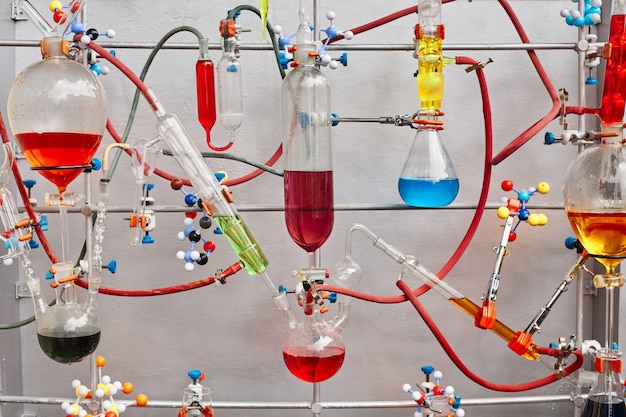
Imagine a world without chemistry—it’s nearly impossible! Chemistry forms the core of countless facets of our everyday experiences, though its influence might escape our immediate notice. It’s present in the life-saving medications we take and even in the smartphones essential to our connectivity. At the center of innovation, chemistry is instrumental in crafting pharmaceuticals that battle illnesses and enhance our quality of life through a deep understanding of biochemical interactions and drug synthesis.
Chemistry’s impact extends far beyond healthcare; it is critical in tackling environmental issues. Through chemistry, we find ways to reduce pollution, advance renewable energy technologies, and manufacture materials that are environmentally friendly. Chemists lead the charge in creating biodegradable plastics and high-efficiency solar cells, pivotal for ecological sustainability. These breakthroughs not only safeguard our planet but also spur economic vitality by creating new sectors and employment opportunities.
In technology, too, chemistry proves essential. The quest for novel substances like superconductors and nanomaterials heavily depends on chemical research. Such materials hold the promise to transform industries by enhancing operational efficiencies and product efficacy. As global challenges mount, chemistry’s role in delivering cutting-edge solutions becomes ever more crucial, highlighting its undeniable significance in shaping contemporary society. There is more on this in Overview to Understand All About of Invisalign Aligner Therapy.
Chemistry’s Impact on Innovation
At the heart of countless scientific advancements, particularly within the realms of pharmaceuticals and renewable energy, lies chemistry. In pharmaceuticals, it is essential for both discovering new drugs and enhancing existing ones. Chemists dedicate themselves to deciphering how molecules interact, paving the way for new medications that tackle a myriad of health issues. This intricate process involves not just concocting novel compounds but also refining those in existence to boost their effectiveness and safety.
In the sphere of renewable energy, chemistry’s role is equally transformative. The quest for robust energy storage solutions like batteries and fuel cells depends heavily on chemical innovation. By investigating novel materials and reactions that store energy more efficiently, chemists are key players in enabling the broader use of clean power sources such as solar and wind. These breakthroughs are crucial in diminishing our dependence on fossil fuels and lessening environmental degradation.
Furthermore, chemistry leads the charge in crafting sustainable materials and methods. Whether it’s developing biodegradable plastics or engineering catalysts that minimize industrial waste, chemists are at the forefront of devising strategies to sustain our planet. These initiatives not only safeguard our environment but also spur economic advancement by creating new sectors and employment opportunities. As global challenges mount, chemistry’s pivotal role in driving innovative solutions becomes ever more indispensable.
Core Chemistry Concepts
Diving into the essentials of chemistry, it’s vital for enthusiasts to grasp the atomic structure at its core. This exploration reveals that atoms consist of protons, neutrons, and electrons. Such insights are crucial as they shed light on how elements bond and create diverse compounds. Furthermore, understanding chemical bonding is key—it unveils the mysteries of how atoms link up to craft molecules, the very foundations of all matter.
Another pillar of chemistry lies in chemical reactions, which rearrange atoms to create new substances. Governed by thermodynamics and kinetics, these reactions not only allow chemists to foresee reaction outcomes but also empower them to engineer novel reactions for tailored purposes. This profound knowledge finds its utility across various domains, from innovating materials to enhancing industrial processes.
To demystify these concepts for learners, educators often turn to simple experiments and visual tools. For instance, illustrating a chemical reaction using common household items can clarify the concepts of reactants and products vividly. Similarly, employing molecular models aids in visualizing how atoms are spatially arranged within a molecule, making abstract chemistry concepts more tangible and comprehensible.
Skills Gained Through Chemistry
Delving into the world of chemistry not only broadens your scientific horizon but also arms you with a suite of versatile skills. Analytical thinking stands out among these, empowering students to dissect intricate issues into digestible segments. This capability proves vital when conducting experiments, analyzing data, or synthesizing results. Such skills are sought after across various professions, including research and development, quality assurance, and regulatory sectors.
Chemistry also hones problem-solving abilities critical for innovation and efficiency in professional settings. Whether it’s pioneering a novel pharmaceutical or streamlining production techniques, chemists apply their sharp critical thinking to overcome complex challenges. These problem-solving skills extend beyond the lab, proving beneficial in fields like engineering, finance, and management.
Moreover, effective communication is another competency enhanced by studying chemistry. Chemists must articulate their discoveries and hypotheses clearly, whether through detailed reports, dynamic presentations, or collaborative discussions with peers. Mastering this skill is essential for any career path as it facilitates knowledge sharing and fosters progress within any professional domain.

Image source: https://www.freepik.com/free-photo/still-life-laboratory-samples_108909894.htm
Introduction to IB Chemistry SL
Dive into the vibrant world of IB Chemistry SL, where students embark on a journey through the fundamental aspects of chemistry. This course lays a robust groundwork in the discipline, enhancing students’ grasp of crucial chemical concepts and their practical applications in everyday scenarios. By intertwining theoretical insights with hands-on experiments, learners cultivate a profound respect for chemistry’s pivotal role in contemporary society.
The curriculum of the IB Chemistry SL course is meticulously crafted to encompass an extensive array of topics, including atomic theory, chemical bonding, organic chemistry, and environmental chemistry. Such comprehensive coverage prepares students thoroughly for advanced studies or careers in science by sharpening their critical thinking and problem-solving skills—tools critical in any scientific endeavor.
For those drawn to scientific careers, the IB Chemistry SL course serves as an invaluable stepping stone. It not only arms them with essential knowledge and competencies for academic advancement but also ignites a zeal for discovery. As they delve into intriguing chemical phenomena, students are inspired to think creatively and devise innovative solutions to intricate challenges, equipping them for fruitful futures in science.
Key Topics in Chemistry
Delving into the realm of chemistry, we encounter a diverse array of subjects pivotal for mastering the discipline. At the heart of these is stoichiometry, a field that quantitatively dissects chemical reactions. Essential for grasping how substances evolve and interact, stoichiometry lays the groundwork for myriad practical applications within chemical studies.
Organic chemistry stands out as another cornerstone within chemical education. This branch delves into carbon-based compounds—life’s molecular scaffolding. A thorough grasp of their structures, behaviors, and transformations is essential across various sectors, including pharmaceuticals, agriculture, and materials science. Mastery in organic chemistry equips students with the necessary skills to pursue advanced research and applications in these vital areas.
Beyond stoichiometry and organic chemistry, the exploration extends to thermodynamics, kinetics, and equilibrium—each critical for analyzing chemical systems’ behaviors and predicting reaction outcomes. Engaging with these fundamental topics furnishes students with a comprehensive perspective on chemistry’s role in practical scenarios across the globe.
Evaluating Student Mastery in Chemistry Courses
In chemistry courses, the evaluation process is meticulously crafted to gauge not only the students’ grasp of the subject but also their prowess in applying this knowledge practically. A pivotal element of this evaluation is the internal assessment, which entails a research project personally undertaken by each student. This project serves as a window for students to delve deeply into a topic that sparks their interest, hone their research abilities, and exhibit their comprehension of complex chemical principles.
Beyond the confines of internal assessments, students’ understanding is further tested through rigorous written examinations. These exams challenge students to recall and apply course material while analyzing and interpreting diverse data sets. Such examinations are instrumental in fostering critical thinking and pushing students to engage deeply with the content they’ve learned.
To thrive in these assessments, it’s crucial for students to cultivate robust study habits and effective time management strategies. Regular study sessions, consistent review of course materials, and diligent practice of exam questions are recommended strategies. Adopting such disciplined approaches helps build self-assurance and enhances overall performance in evaluations, paving the way for academic success within the discipline.
Benefits of Studying Chemistry
Diving into a chemistry course opens up a world of opportunities for those with a keen interest in the sciences. A primary benefit is the solid groundwork it lays for advanced studies. The curriculum spans a broad spectrum of topics and hones critical skills, equipping students robustly for their academic journeys ahead. This strong base proves crucial for those aiming to delve deeper into chemistry or adjacent fields.
Beyond academic preparation, chemistry study carves out essential skills transferable across various careers. Fields like research and development, quality control, and regulatory affairs particularly prize the analytical and problem-solving abilities that chemistry cultivates. Students completing this course find themselves at an advantage in the competitive job market, poised for fruitful careers in science.
Moreover, engaging with chemistry ignites a deep-seated enthusiasm for the subject while promoting an inventive mindset crucial to tackling complex challenges. This creative approach is invaluable across scientific disciplines, enabling practitioners to drive progress within their fields and make meaningful contributions globally. Enrolling in a chemistry course does more than impart knowledge; it inspires a lasting passion for discovery.
Resources for Chemistry Students
Chemistry students are equipped with a plethora of resources to navigate their courses successfully. From detailed textbooks to dynamic online platforms, these tools offer extensive insights into the curriculum, enabling students to solidify their grasp on crucial concepts. Such resources prove invaluable for solo study sessions and foster a robust comprehension of the discipline.
Beyond the pages of textbooks and digital content, chemistry learners can also tap into collaborative study groups and tailored tutoring services. These forums allow students to exchange ideas and solve problems collectively, enhancing their learning experience. Personalized tutoring further provides targeted assistance and mentorship, proving crucial for those requiring extra support or eager to delve deeper into complex topics.
The comprehensive support network available for chemistry enthusiasts ensures they are well-prepared with necessary tools and guidance to thrive academically. Leveraging these resources effectively not only boosts students’ confidence but also elevates their academic performance, paving the way towards a prosperous career in science.
Inspiring Future Scientists
The realm of chemistry sparkles with potential, brimming with opportunities for groundbreaking innovations and discoveries. As global challenges mount, the significance of chemistry in devising solutions grows ever more critical. Whether it’s crafting new materials and energy solutions, enhancing healthcare, or safeguarding our environment, chemistry stands poised to deliver profound impacts across the globe.
For those students drawn to the sciences, delving into chemistry can pave a robust path toward professional achievement. Chemistry courses not only lay a strong educational foundation but also sharpen vital skills needed for advanced studies and fruitful careers in this dynamic field. These courses ignite a fervor for chemical sciences while pushing students to think creatively and devise inventive answers to intricate issues.
Looking ahead, it’s crucial that we kindle the enthusiasm of upcoming scientists and motivate them to explore their chemical curiosities. By stepping into chemistry classes, students equip themselves with essential knowledge and skills poised to make meaningful contributions worldwide and push forward their scientific domains. With proper education backed by supportive frameworks, their future possibilities are boundless.
Apart from that if you want to know about “Bachelor of Science in Chemical Engineering: A Gateway to Innovation and Problem-Solving” then please visit our “Education” Category.
